
The Real Constraint: Working Memory
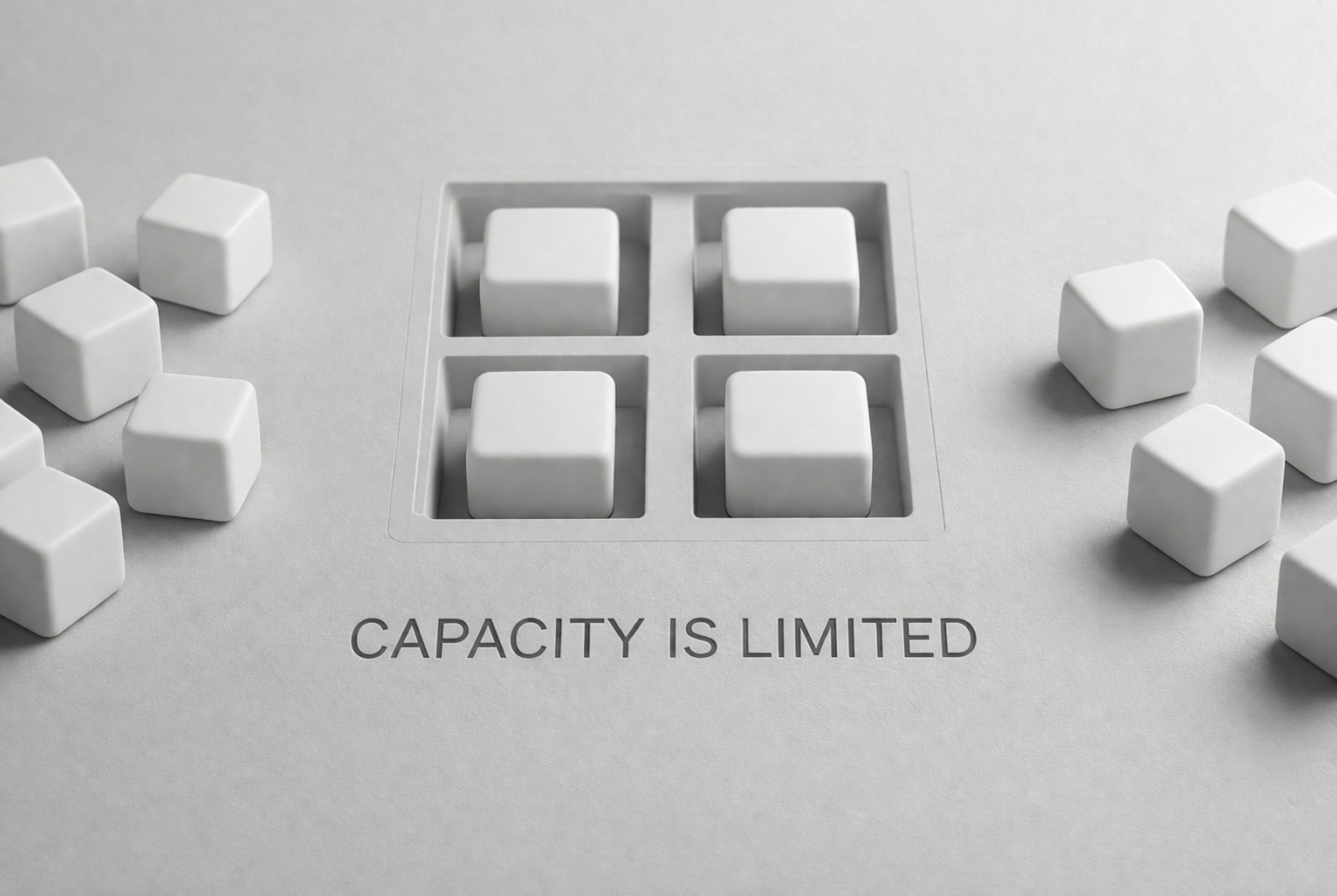
At the core of most execution problems is something very simple.
Your team is not hitting a motivation limit.
They are hitting a cognitive limit.
Humans can only hold a small number of things in their mind at once.
This is called working memory.
Classic research by George A. Miller suggested we can handle about 7 items. More recent work by Nelson Cowan shows the number is likely closer to 4.
Not 20.
Not 10.
Closer to 4.
This is not a soft idea.
It is a hard constraint.
Why This Matters More Than You Think
Every part of your operating environment competes for that limited space.
Tasks
Messages
Priorities
Tools
Decisions
All of it lands in the same place.
Working memory.
Once that capacity is exceeded, performance does not decline gradually.
It breaks.
People forget things.
They miss steps.
They slow down.
They make avoidable mistakes.
From the outside, it looks like poor execution.
From the inside, it feels like overload.
Most Companies Are Designed to Exceed This Limit
Take a typical team member.
At any given moment, they are expected to:
Track multiple priorities
Respond to messages across platforms
Switch between tools
Keep context from past conversations
Execute on current tasks
That is far more than 4 things.
And it is not static.
It is constantly changing.
This is where execution starts to fall apart.
The Cost of Holding Too Much
Working memory is not just about how much you can hold.
It is about how well you can process.
When too much is loaded:
Decision quality drops
Speed decreases
Errors increase
Rework becomes common
Research in cognitive load theory shows that when mental demand exceeds capacity, learning and performance degrade quickly. This is well established in work by John Sweller.
Your team is not choosing to slow down.
Their system is saturated.
Why “Try Harder” Backfires
Most founders respond to slow execution by increasing pressure.
More urgency.
More follow ups.
More visibility.
This adds more inputs into an already overloaded system.
Which makes the problem worse.
It is the equivalent of solving traffic by adding more cars to the road.
What High Performing Systems Do Instead
They design for the limit.
They assume people can only hold a few things at once.
Then they build around that reality.
They reduce active priorities
Not everything is important right now.
They externalize memory
Processes, checklists, and systems carry the load so people do not have to.
They simplify decision making
Clear rules replace constant thinking.
They create clarity of focus
One direction at a time.
This is not about discipline.
It is about design.
A Simple Test for Founders
Ask yourself:
If I removed half of what my team is currently tracking, would execution improve?
In most cases, the answer is yes.
Not because people suddenly got better.
Because the system became manageable.
The Founder Takeaway
You are not just managing people.
You are designing the cognitive environment they operate in.
If that environment requires them to hold too much, execution will always feel slower than it should.
No matter how strong your team is.
The fastest teams are not the busiest.
They are the clearest.
Where Founded Partners Comes In
This is one of the most overlooked constraints in growing companies.
As the business expands, complexity increases quietly.
More priorities.
More tools.
More communication.
At some point, the system exceeds what people can realistically process.
That is where we step in.
We work with founders to:
Strip away unnecessary complexity
Define what actually matters right now
Build operating systems that reduce cognitive load
Align teams so execution becomes clear and predictable
Design the business to scale beyond constant founder involvement
We do not add more structure for the sake of it.
We remove what is getting in the way.
If your team feels busy but progress is inconsistent, there is a good chance you are running into this exact constraint.
And once you see it, you can fix it.