
The Hidden Cost of Bad UX Inside Your Company
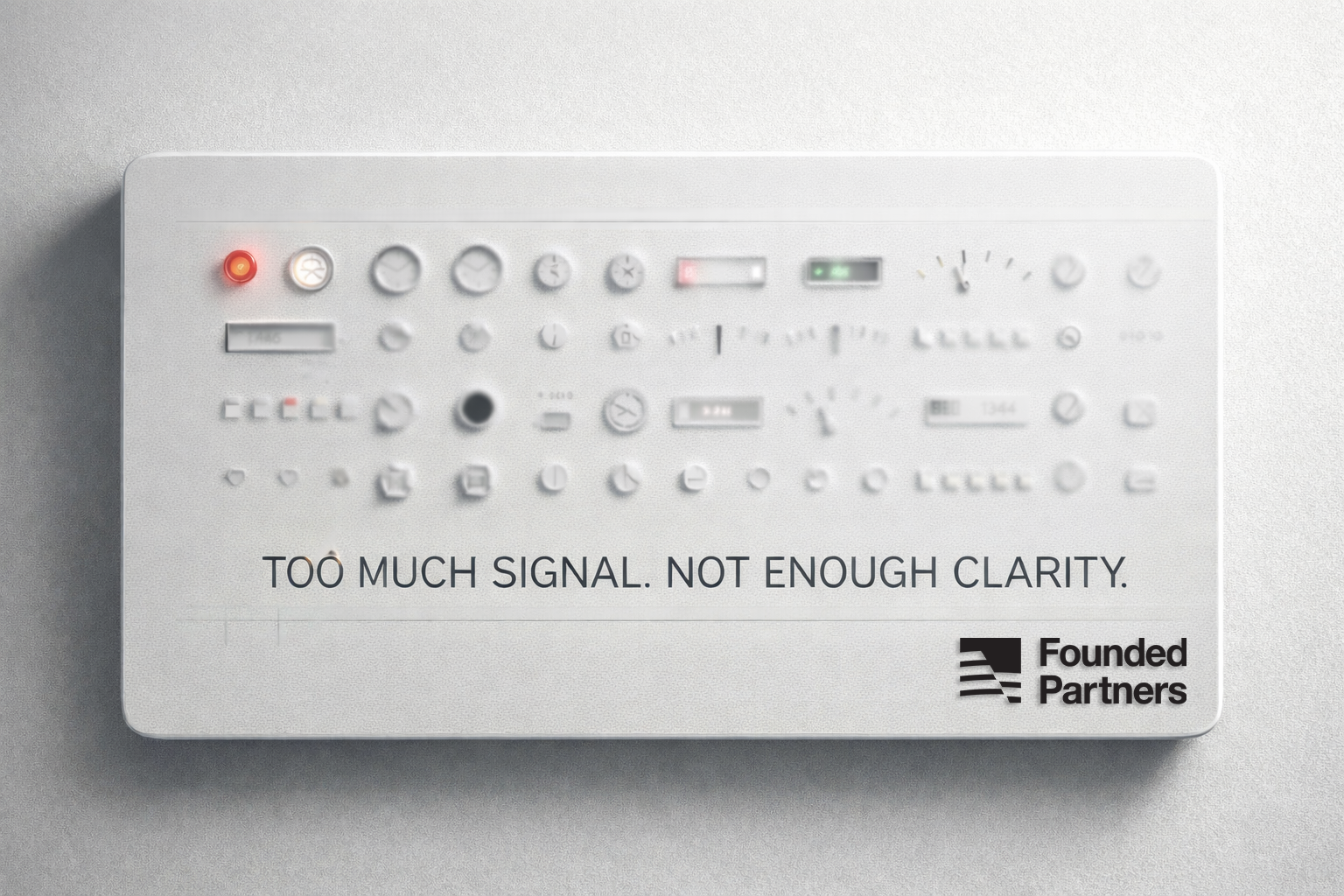
When founders hear “UX,” they think about customers.
Landing pages.Onboarding flows.App interfaces.Conversion funnels.
But the most expensive UX problems in scaling companies are often invisible.
They live inside your organization.
In your dashboards.In your approval workflows.In your Slack channels.In your CRM.In your KPI reports.
Internal user experience shapes:
Decision quality.Operational discipline.Morale.Burnout.Risk exposure.
And most founders never design for it.
UX Is Not Just for Customers
Don Norman’s foundational work in The Design of Everyday Things changed how we think about usability.
His core insight was simple:
People do not fail because they are incompetent.
They fail because systems are poorly designed.
If you are unfamiliar with Norman’s principles, start here:
Overview of The Design of Everyday Things: https://jnd.org/books/the-design-of-everyday-things/
Summary of Norman’s design principles: https://www.interaction-design.org/literature/topics/don-norman
Norman focused on consumer products.
But his principles apply equally to internal systems.
Your internal tools have users.
Your managers.Your sales reps.Your finance team.Your leadership group.
And when internal UX is poor, performance suffers.
Cognitive Load: The Invisible Performance Tax
One of the most important concepts here is cognitive load.
Cognitive load theory explains that human working memory is limited. When systems demand too much mental processing, performance declines and error rates increase.
If you want a deeper overview:
Cognitive load theory explained: https://www.sciencedirect.com/topics/psychology/cognitive-load-theory
Sweller’s foundational work on cognitive load: https://link.springer.com/article/10.1007/BF00375122
In a scaling company, cognitive load increases when:
Dashboards contain too many metrics.
Slack channels multiply without structure.
KPIs are misaligned or unclear.
Tools do not integrate cleanly.
Decision rights are ambiguous.
When everything feels harder than it should, cognitive overload is often the culprit.
And overload has real consequences:
Slower decisions.
Lower quality judgment.
Higher error rates.
Emotional fatigue.
Burnout disguised as high performance.
Founder Translation: Where Bad Internal UX Shows Up
Let’s make this concrete.
1. Complex Dashboards Increase Decision Fatigue
Many founders believe more data equals better decisions.
But decision science tells us that too many choices and too many inputs reduce clarity.
See:
Decision fatigue overview: https://www.apa.org/monitor/2011/12/decision-fatigue
If your executive dashboard contains:
30 metrics.
No hierarchy.
No visual prioritization.
No clear red flags.
Then your leadership team is not empowered.
They are overloaded.
Good internal UX makes critical signals obvious.
Poor UX buries them in noise.
2. Poor Mapping Between KPIs and Incentives
Norman emphasizes mapping: the relationship between action and outcome must be intuitive.
Inside companies, mapping often breaks when:
Sales incentives reward revenue but not margin.
Operations is measured on speed but not error rate.
Managers are evaluated on output but not team health.
When KPIs and incentives are poorly mapped, behavior diverges from intent.
Misalignment is not a motivation problem.
It is a design flaw.
3. Slack Chaos and Signal Dilution
Tool sprawl is a modern scaling problem.
More channels.More threads.More notifications.More integrations.
The result?
Signal dilution.
Research on attention and interruption shows that frequent context switching reduces deep thinking and increases error probability.
See:
Attention residue research summary: https://hbr.org/2016/03/why-you-shouldnt-check-your-email-first-thing-in-the-morning
If critical decisions are buried in Slack threads, the issue is not discipline.
It is poor signal design.
4. Invisible Workflows and Weak Feedback
Norman highlights the importance of feedback.
Every action should produce a clear, visible result.
Inside companies, feedback often fails when:
Approvals are submitted but not confirmed.
Tasks are assigned but not visibly tracked.
KPIs are reviewed monthly instead of continuously.
Errors are discovered long after impact.
Delayed feedback increases risk.
Immediate feedback strengthens performance.
The Hidden Cost of Bad Internal UX
Bad internal UX does not just create inconvenience.
It creates:
Increased error rates.
Slower strategic execution.
Frustrated high performers.
Hidden burnout.
Founder over involvement.
Reduced scalability.
Founders often interpret these symptoms as:
“We need stronger operators.”
But the stronger the operator, the more they feel friction in broken systems.
High performers are especially sensitive to bad design.
Over time, friction erodes morale.
And morale erosion becomes culture erosion.
Improving Internal Processes Through UX Thinking
If you want to improve operational discipline, apply UX thinking internally.
Here is how.
Step 1: Make Key Metrics Visible
Visibility is foundational.
Ask:
What are the 5 metrics that truly drive performance?
Are they visible daily?
Are they ranked by priority?
Is deviation obvious?
If someone has to search for critical data, your design is weak.
Visibility reduces ambiguity.
Ambiguity increases error.
Step 2: Reduce Unnecessary Choice
Research on decision fatigue shows that excessive choice reduces clarity and increases procrastination.
Ask:
How many tools does one role need to use daily?
How many Slack channels are essential?
How many approval paths exist?
How many versions of the same document circulate?
Simplification is not minimalism for aesthetics.
It is cognitive protection.
Step 3: Align KPIs with Intended Behavior
Poor mapping creates silent dysfunction.
Audit:
Are incentives reinforcing the behavior you want?
Do performance metrics encourage risk taking without guardrails?
Are leaders rewarded for discipline or only for growth?
Balanced measurement frameworks such as the Balanced Scorecard can help:
https://hbr.org/1992/01/the-balanced-scorecard-measures-that-drive-performance
Growth without resilience metrics invites fragility.
Step 4: Add Feedback Loops to Critical Actions
Feedback reduces error.
Introduce:
Automated confirmations.
Visible approval queues.
Clear task completion signals.
Short feedback cycles for major initiatives.
If feedback is delayed, mistakes compound.
If feedback is immediate, correction is easier.
Step 5: Audit Internal UX Like You Audit Customer UX
You likely test customer journeys.
Do you test internal journeys?
Pick one:
Onboarding.
Deal approval.
Budget authorization.
Product release.
Walk through it step by step.
Ask:
Where is confusion likely?
Where is information hidden?
Where does cognitive load spike?
Where would a new hire struggle?
Internal UX testing often reveals obvious but unaddressed friction.
Reducing Decision Fatigue in Leadership
Founders often experience a subtle shift as they scale.
Everything feels heavier.
Every decision feels consequential.
Meetings multiply.
Slack pings accelerate.
This is not weakness.
It is cumulative cognitive load.
Reducing decision fatigue requires structural change:
Pre defined decision rights.
Clear escalation rules.
Standardized meeting formats.
Visible priorities.
Elimination of redundant reporting.
Leadership performance improves when cognitive noise decreases.
Designing Scalable Systems
Scalability is not just revenue growth.
It is:
The ability to maintain decision quality and discipline as complexity increases.
If internal UX is poor, complexity amplifies dysfunction.
If internal UX is strong, complexity is absorbed.
This is the difference between scaling and breaking.
Founder Reflection Questions
If your company feels harder to run than it should, ask:
What tool causes the most frustration?
What metric is most misunderstood?
What decision requires the most mental energy?
Where does confusion repeat?
Where do high performers complain quietly?
Internal UX is rarely discussed in board meetings.
But it shapes every outcome.
Designing better systems internally is not cosmetic.
It is strategic.
Because your team’s experience inside your company determines how effectively they build value outside it.