
Startup Funding Advisory Services: A Strategic Guide to Capital Raising in 2026

What if the most critical element of your next round isn't the pitch deck, but the quiet operational machinery behind it? Many founders treat fundraising as a marketing sprint, yet the most sophisticated investors in 2026 aren't just buying a vision. They're looking for an architectural foundation that can withstand the pressures of rapid scale. You've likely felt the frantic energy of the traditional fundraising cycle, where the rush to secure capital often leads to misaligned partnerships. By leveraging professional startup funding advisory services, you can move away from the noise and focus on the structural integrity of your business before you ever walk into a boardroom.
This guide explores how to move beyond the superficial polish of a slide deck to build a robust, investor-ready foundation that attracts high-conviction capital with minimal dilution. You'll learn to align your capital strategy with a future exit plan, ensuring every dollar raised strengthens your organization. We'll examine the methodology of refining your operations, guiding your leadership team, and strengthening the very core of your enterprise. It's time to stop chasing checks and start building a business that commands the right investment.
Key Takeaways
- Move beyond the pitch deck by viewing capital raising as a process of architectural refinement rather than a simple marketing exercise.
- Understand why modern startup funding advisory services must prioritize operational optimization to ensure your business can sustain rapid growth post-funding.
- Identify structural weaknesses in your foundation through a rigorous operational audit before they are surfaced during investor due diligence.
- Evaluate different advisory models to ensure your capital strategy remains aligned with your long-term vision and eventual exit plan.
- Build a narrative of durability that attracts high-conviction investors who value substance and organizational health over vanity metrics.
Beyond the Pitch Deck: Why Modern Startup Funding Advisory Services Must Evolve
The traditional approach to capital raising often feels like a high-stakes performance. Founders spend months polishing slides, rehearsing scripts, and chasing introductions, only to find that the capital they eventually secure comes with heavy strings or misaligned expectations. The 2026 funding climate demands a higher standard of transparency and resilience. Investors have become more discerning, looking past the "blitzscaling" mentality to find companies with clear paths to profitability and sustainable scale. This shift requires a move away from superficial metrics. Instead, founders must demonstrate that their internal systems are capable of absorbing and deploying capital effectively. High-conviction investors now prioritize architectural integrity over vanity growth.
Modern startup funding advisory services have transitioned from transactional brokerage to deep strategic partnership. A broker focuses on the close; a partner focuses on the company's health. While a broker might open doors, a strategic architect ensures the house is worth entering. This evolution is necessary because capital is no longer just a fuel for growth. It's a tool for transformation that requires precision, discipline, and a long-term perspective. By engaging with startup funding advisory services that prioritize this architectural approach, founders ensure their capital strategy supports their ultimate exit goals rather than just their immediate cash needs.
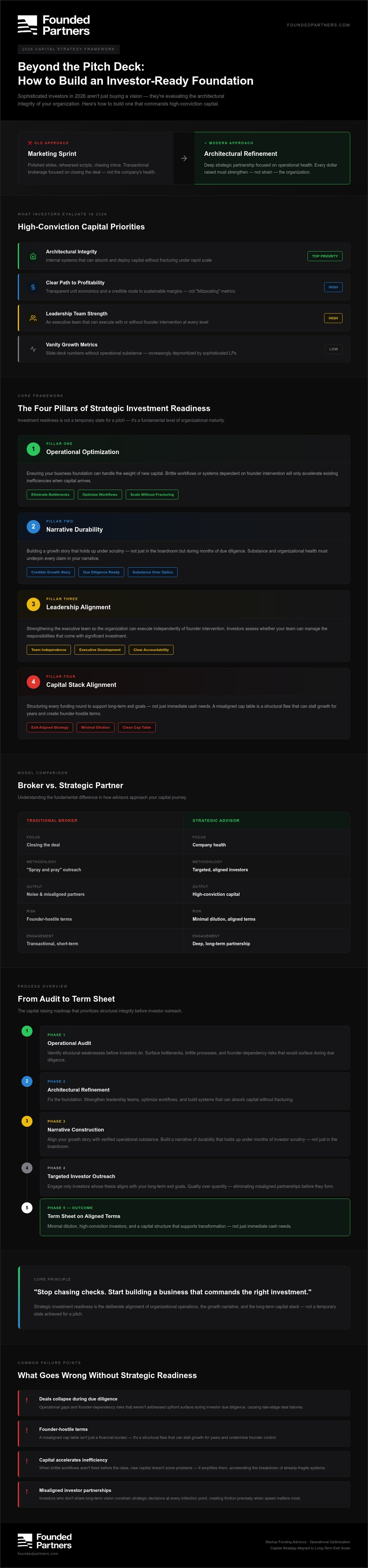
Strategic investment readiness is the deliberate alignment of organizational operations, the growth narrative, and the long-term capital stack.
The Limitations of Traditional Fundraising Support
Traditional fundraising support often relies on a "spray and pray" methodology. This approach creates significant noise but rarely results in high-conviction terms. When advisors focus solely on the pitch deck, they create a dangerous gap between what's promised and what the operations can actually deliver. This misalignment often surfaces during due diligence, causing deals to collapse or leading to "founder-hostile" terms that compromise the future of the enterprise. A misaligned cap table isn't just a financial burden. It's a structural flaw that can stall growth for years. Founders who rely on superficial support often find themselves with investors who don't share their long-term vision.
The Rise of the Strategic Advisory Model
The role of a modern advisor has shifted toward operational refinement. It's no longer enough to be a "door opener." The value now lies in identifying bottlenecks, optimizing workflows, and strengthening leadership before the raise begins. This process requires a sense of calm expertise. Navigating a funding round is psychologically taxing. Having a seasoned peer who prioritizes the health of the organization over vanity metrics provides the security founders need to make disciplined decisions. This is a shared journey. The goal is to build something substantial, durable, and ready for the next stage of growth, ensuring that the organization is prepared for the responsibilities that come with significant investment.
The Four Pillars of Strategic Investment Readiness
Investment readiness is not a temporary state achieved for a pitch; it's a fundamental level of organizational maturity. While many founders focus on the optics of a raise, the most successful capital journeys in 2026 are built on a foundation of structural integrity. To attract high-conviction capital, a business must demonstrate that it's prepared to absorb, deploy, and multiply that investment without fracturing. This requires moving beyond financial modeling to address the very architecture of the enterprise. By engaging with startup funding advisory services that prioritize these structural elements, founders can ensure their organization is prepared for the rigorous scrutiny of modern due diligence.
Pillar 1: Operational Optimization
Operational optimization is the process of ensuring your business foundation can handle the weight of new capital. Sophisticated investors view your internal systems as a primary signal of organizational health. If your workflows are brittle or dependent on founder intervention, capital will only accelerate your existing inefficiencies. You must identify and fix bottlenecks before they become red flags during due diligence. Implementing efficient business foundations suggests long-term performance and reliability. It proves to investors that you aren't just building a product, but a durable machine capable of sustainable growth. This level of operations optimization transforms your business from a risky bet into a strategic asset.
Pillar 2: Narrative and Scalability
Modern narratives must move beyond "disruptor" jargon to focus on architectural strength and sustainability. A narrative rooted in durability explains how the business will survive and thrive over the next decade, not just the next quarter. Proving scalability requires more than just optimistic projections; it demands data-backed evidence of your ability to multiply output. You need to show that your unit economics remain healthy as you scale and that your team structure is ready to evolve. This alignment between your growth objectives and your operational reality is what attracts the right capital partners. They aren't just looking for a high ceiling; they're looking for a solid floor.
The final two pillars focus on the human and strategic elements of the enterprise. Scalability strategy involves proving that your team structure is ready to multiply, ensuring that the right talent is in the right seats to drive the next phase of growth. Leadership alignment is perhaps the most critical transition for founder-led firms. It involves preparing the internal team for the transition to a professionalized organization. This means moving from a centralized decision-making model to a distributed, high-performance culture. When these four pillars are aligned, the fundraising process shifts from a frantic search for cash to a disciplined selection of the right strategic partners.
Comparing Funding Advisory Models: Which Path Fits Your Founder Journey?
Choosing the right partner for your capital journey is a decision that impacts your organization for years. It's not just about who has the best network, but who understands the structural needs of your specific enterprise. Most startup funding advisory services fall into three distinct categories. The "Transactional Agency" operates at high volume, focusing on the production of pitch decks and financial models. They're often efficient for early-stage material creation but rarely touch the operational rot that stalls growth post-funding. Then there's the "Fractional CFO" model. These professionals are exceptional with numbers and cash flow, providing the quantitative validation investors expect. However, they often lack the strategic transaction lens required to navigate complex negotiations or align the capital stack with a long-term exit plan.
The "Strategic Peer" or "Architect" model represents a shift toward integration. This approach is for the founder who recognizes that capital raising is a component of a larger business transformation. It doesn't just prepare you for a deal; it prepares you for the weight of the growth that follows. By integrating funding strategy with operations and exit planning, this model ensures that every dollar raised serves a specific architectural purpose. Founders must assess their current stage and specific needs to determine which path provides the necessary durability for their next chapter.
The Transactional Agency vs. Strategic Peer
A high-volume agency might be suitable for a seed-stage founder who simply needs professional materials to begin conversations. But as you move toward Series A and B, the stakes change. These consequential transitions require a "Trusted Peer" approach. At this level, the difference between "getting a check" and "attracting the right investment" becomes clear. You aren't just looking for cash; you're looking for high-conviction partners who align with your vision. A strategic advisor helps you filter for quality, ensuring your cap table remains a source of strength rather than a point of friction. They prioritize the long-term health of the business over the speed of the transaction.
Assessing Advisor Character and Competence
Character is as important as competence in a long-term partnership. You need an advisor who has the integrity to tell you when your operations aren't ready for a raise. Ask potential partners how they handle operational bottlenecks or what they prioritize during a due diligence breakdown. A seasoned mentor who's navigated these pitfalls before will provide the steady hand and psychological security needed during the fundraising cycle. They should value the health of your organization over vanity metrics. This transparency builds deep trust, allowing you to focus on building something substantial while they help refine the architectural details of your raise. Professional startup funding advisory services should feel like a steadying force, not another source of frantic energy.
Navigating the Capital Raising Roadmap: From Audit to Term Sheet
Raising capital is a methodical progression. It isn't a race to find the first available check. In 2026, the most effective startup funding advisory services follow a rigorous roadmap that begins long before the first pitch is delivered. This sequence ensures that the organization doesn't just survive the scrutiny of due diligence but emerges from it stronger and more aligned. By treating the raise as a series of architectural milestones, founders can maintain control over their narrative and their equity.
The roadmap consists of five critical stages:
- Step 1: The Operational Audit. Uncovering structural weaknesses and leadership bottlenecks before external investors identify them as red flags.
- Step 2: Foundation Refinement. Implementing scalability strategies and operations optimization to ensure the business can absorb and deploy new capital effectively.
- Step 3: Strategic Narrative Development. Building a case for investment based on architectural integrity and long-term durability rather than just market disruption.
- Step 4: Targeted Capital Sourcing. Identifying and engaging with backers whose character and vision align with the founder's long-term objectives.
- Step 5: Transaction Management. Guiding the leadership team through the complexities of due diligence and the closing process with technical precision.
The Pre-Raise Operational Audit
An internal audit is the cornerstone of true investor readiness. It allows you to refine, guide, and strengthen the core business model before external eyes see it. This process isn't about hiding flaws; it's about fixing them. By building a data room that tells a story of disciplined growth and operational maturity, you signal to sophisticated investors that you are a professional steward of capital. This proactive approach reduces friction during the raise and sets a high standard for organizational health. It transforms the data room from a hurdle into a strategic asset.
Managing the Transition and Due Diligence
The peak of the fundraising cycle is often the most psychologically demanding phase for a founder. This is where leadership advisory becomes vital. Managing significant organizational change while simultaneously negotiating a term sheet requires a level of calm expertise that keeps the enterprise focused. You must ensure that the economics of the term sheet align with your long-term exit strategy, preventing short-term capital needs from compromising the future of the firm. Maintaining this perspective allows you to navigate the high-pressure closing phase with integrity and clarity. If you are ready to move beyond the frantic energy of traditional fundraising, learn how our capital raising support can help you build a durable foundation for growth.
Founded Partners: Aligning Your Capital Strategy with Long-Term Transformation
Founded Partners operates as a strategic architect for founder-led organizations. We recognize that capital is a tool, not the destination. Many startup funding advisory services focus solely on the immediate transaction, leaving the founder to deal with the operational fallout once the funds hit the bank. Our approach is different. We integrate capital raising support with business transformation and operations optimization to ensure that your organization remains durable during periods of high-velocity growth. This method prioritizes the long-term health of the enterprise over short-term vanity metrics.
Every capital decision made today should be viewed through the lens of your eventual exit. If a funding round creates a cap table that limits your future options, it isn't successful; it's a structural liability. We provide a steady hand for consequential growth, helping you navigate the transitions that define a company's legacy. By aligning your capital strategy with a clear exit plan, we ensure that you retain the flexibility and value you've worked so hard to build. We act as a deeply invested partner, valuing character and competence in equal measure.
Building for the Future, Not Just the Round
Our advisory focuses on the "how" of the process as much as the "what." It's not enough to simply secure capital. You must build organizational resilience that lasts far beyond the initial funding announcement. This requires a commitment to refining internal systems, guiding leadership teams, and strengthening the company's core. We help you move beyond the frantic energy of the raise to establish a methodical pace of growth. For founders who value substance over hype, we offer Strategic Capital Raising Support for Founder-Led Firms that prioritizes structural integrity at every stage.
The Path to a Consequential Exit
A consequential exit is the result of years of disciplined decisions. We assist founders in attracting capital that fuels growth without sacrificing their ultimate goals. This often involves managing the transition from founder to CEO through specialized leadership advisory. As the organization professionalizes, the founder's role must evolve from hands-on execution to strategic leadership. We act as a trusted peer during this transition, providing the psychological security and strategic clarity needed to succeed. If you're ready to align your funding with a broader vision of success, Speak with a Partner about your growth and capital strategy today. Together, we can build a foundation that supports your most ambitious objectives.
Building for Durability Beyond the Capital Raise
Capital raising is an architectural endeavor. Success in the 2026 landscape requires founders to move beyond the frantic energy of the pitch deck to focus on the structural integrity of their operations. By prioritizing organizational health and long-term exit planning, you ensure that every dollar of investment strengthens your firm's foundation. Strategic startup funding advisory services provide the steady hand needed to navigate these consequential transitions with clarity. You've seen that investment readiness is a state of organizational maturity, not just a set of slides. It requires aligning your team, your narrative, and your capital stack with your ultimate vision.
Founded Partners offers a boutique, partner-led approach specialized for founder-led organizations. We reject vanity metrics in favor of sustainable growth and leadership alignment. We're here to act as your trusted peer through every stage of the journey, ensuring the "how" of your process is as strong as the "what." Partner with Founded Partners to refine your capital strategy and build a durable foundation. Your next round should be more than a financial milestone; it's a deliberate step toward your ultimate legacy. Build something that lasts.
Frequently Asked Questions
What is the difference between a fundraising consultant and a strategic funding advisor?
A fundraising consultant typically focuses on the production of a pitch deck and facilitating introductions to a broad network. In contrast, a strategic funding advisor treats capital raising as a component of the company's broader architectural health. They focus on refining your operations and aligning your growth narrative with long-term durability. This partnership ensures you don't just secure a check, but attract capital that matches your organizational values and vision.
At what stage should a founder-led business seek startup funding advisory services?
Founders should ideally engage startup funding advisory services six to twelve months before a consequential transition, such as a Series A or B round. This lead time allows for a thorough operational audit and the refinement of internal systems. By addressing structural bottlenecks early, you enter the fundraising cycle with a high-conviction narrative. Waiting until you need cash often leads to rushed decisions and misaligned investor partnerships.
How does business transformation consulting help with capital raising?
Business transformation consulting identifies the operational rot that often stalls growth after a successful raise. It helps founders build a scalable foundation by optimizing workflows and strengthening leadership structures. When investors see a business that has already undergone this refinement, they perceive lower risk and higher maturity. This alignment between your internal machinery and your growth promises makes your enterprise significantly more attractive to high-conviction capital.
Can a funding advisor help with exit planning during a Series A or B round?
Yes, exit planning should be a central consideration in every capital raise, even at earlier stages like Series A or B. A strategic advisor ensures that the economics of your current term sheet don't create "founder-hostile" conditions that complicate a future sale. By aligning your capital stack with your long-term goals now, you preserve the flexibility and value required for a consequential exit down the road.
What should I look for in a boutique advisory firm for founders?
Look for a firm that prioritizes character and partner-led engagement over high-volume transactional metrics. A boutique firm should act as a "Trusted Peer" rather than a distant consultancy. They should demonstrate a deep understanding of operations optimization and business transformation rather than just having a large contact list. The right partner provides calm expertise and a steady hand during the psychological pressures of a raise.
How do startup funding advisory services manage equity dilution and term-sheet economics?
Professional startup funding advisory services manage dilution by focusing on the quality and conviction of the capital rather than just the dollar amount. They provide technical precision during term-sheet negotiations to protect the founder's equity and long-term control. By optimizing your operations beforehand, they help you command a higher valuation. This strategic approach ensures the capital you raise serves as a tool for growth rather than a source of friction.
Why is operations optimization critical for investor readiness?
Operations optimization is critical because it signals to investors that your business is a professionalized organization ready for scale. Brittle systems often fracture under the weight of new capital, which sophisticated backers identify as a significant risk during due diligence. Proving that your internal foundation is efficient and resilient builds deep trust. It shows that you won't just burn through capital, but will deploy it to strengthen the enterprise.
What is the "Strategic Architect" approach to capital raising?
The "Strategic Architect" approach views capital raising as a deliberate part of organizational design rather than a marketing exercise. It prioritizes the "how" of the process, ensuring that the business transformation matches the growth narrative. This method integrates operations, leadership advisory, and exit planning into a single, cohesive strategy. It's about building a durable machine that is capable of delivering on its promises and sustaining its legacy.